The line outside the Original Rainbow Cone on August 9 wrapped past the parking lot on Western Avenue, the same lot where kids have been told for three generations not to run across without looking. Four months earlier, on Longwood Drive, a smaller crowd gathered around banners that had just gone up between 87th and 115th Streets, celebrating a federal designation that most people driving past had never thought to ask about. One event involved ice cream. The other involved a City Council resolution. Both were birthday parties for something that opened in Beverly and simply never left.
That's the coincidence worth sitting with. Beverly had two real anniversaries this year, a full century apart in age, and they are not separate stories that happened to land in the same twelve months. They are the same story told twice.
Two Signs, Same Summer
The first sign was edible. Joe and Katherine Sapp opened what became the Original Rainbow Cone in 1926, in a small shack near 92nd and Western that they eventually replaced with the building still standing at 9233 S. Western Ave. This year the shop ran a buy-one-get-one week from August 3 through 9, capped by a birthday bash at the original location with a prize wheel and a tie-in promotion at Rate Field, where White Sox fans got a shot at a free cone if the team scored in the fourth inning. A hundred years, marked with cake and a spinning wheel, at the same address where it started.
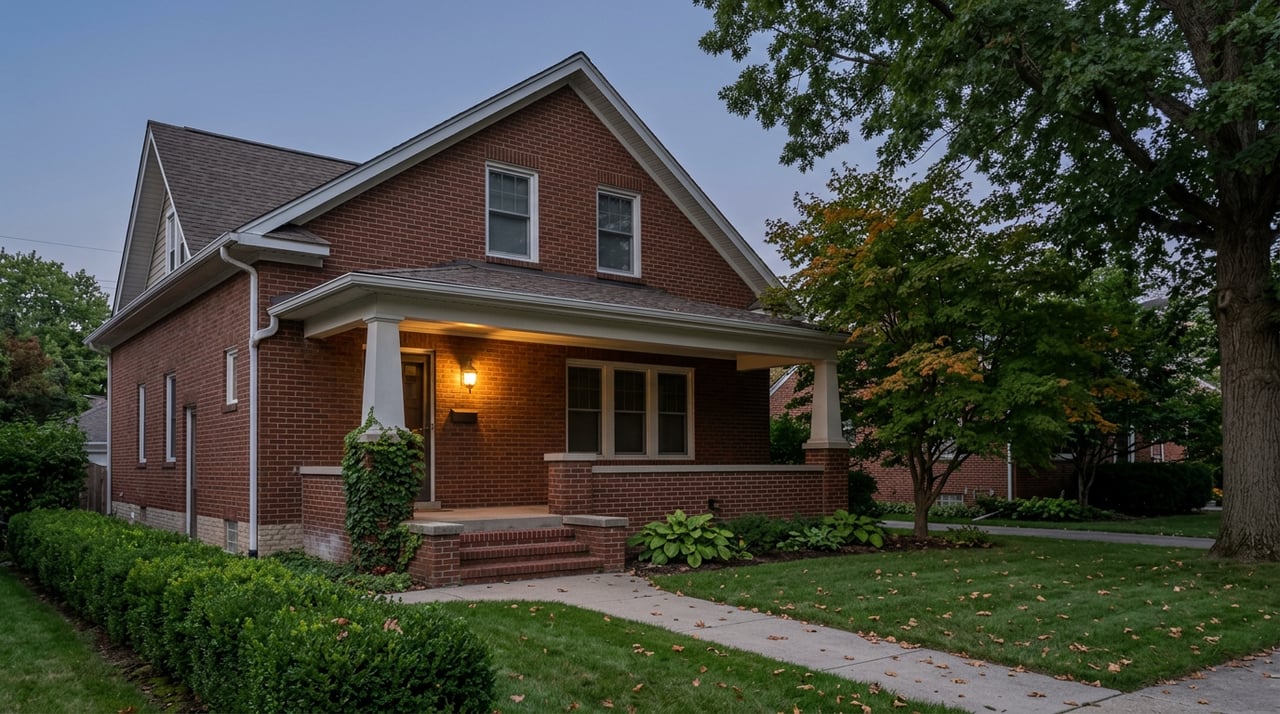
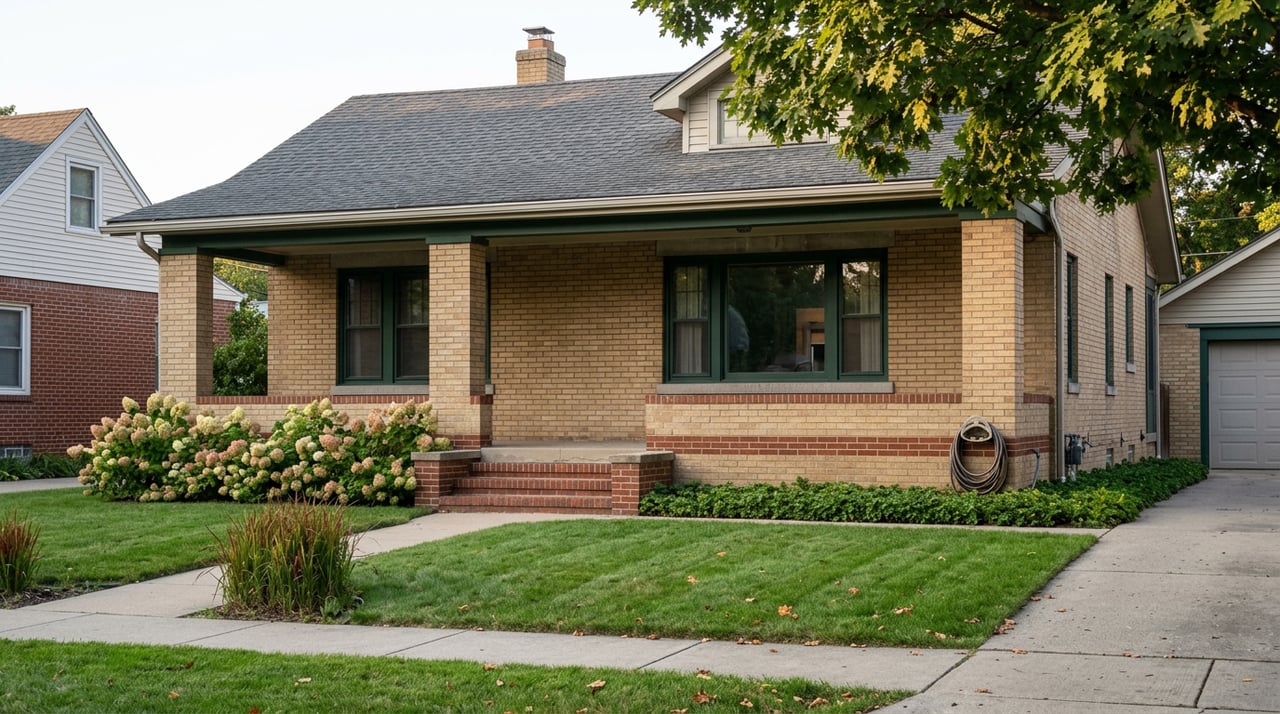
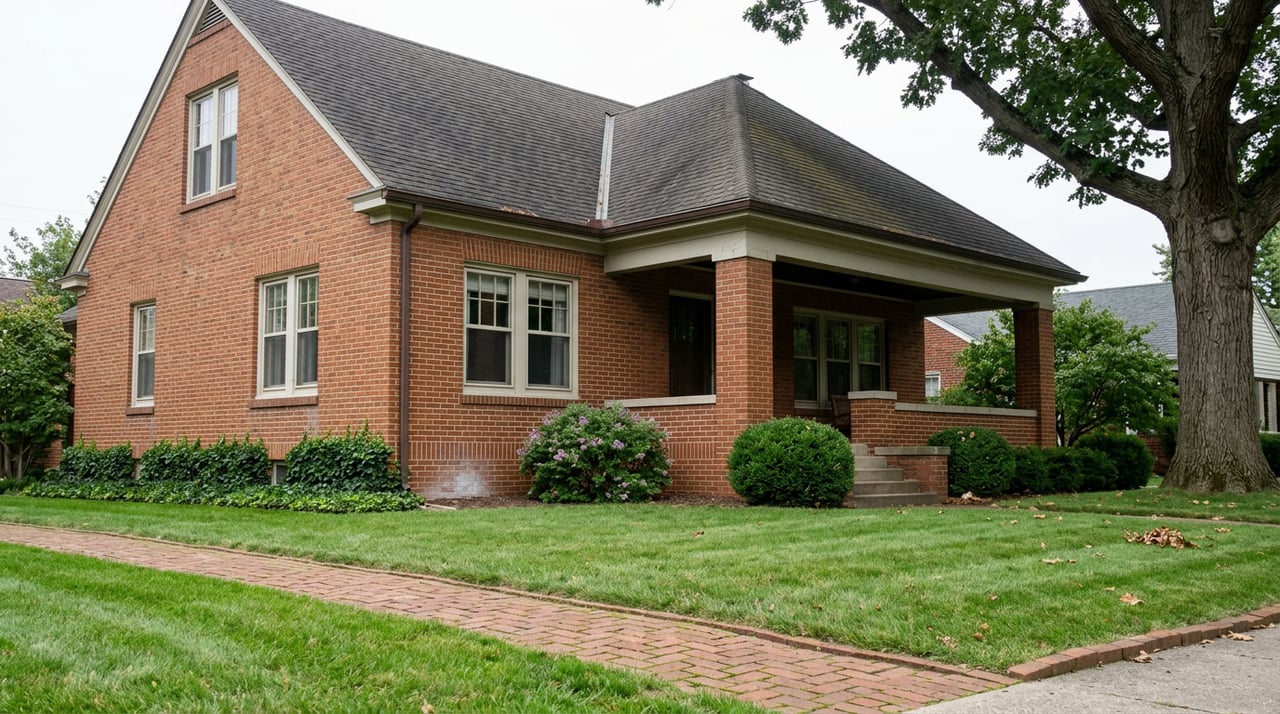
The second sign was architectural. The Ridge Historic District, which runs through Beverly and Morgan Park along the high ground the neighborhood sits on, was listed on the National Register of Historic Places on May 28, 1976. Fifty years later, the Ridge Historical Society and the Beverly Area Planning Association marked the anniversary with a banner ceremony on Longwood Drive on April 17, followed by a Home Tour on May 17 that started at the Mercy Home for Boys and Girls on Longwood Drive and stepped through four homes inside the district. Historian Tim Blackburn, speaking for the Ridge Historical Society, called it a living outdoor museum of architecture, and meant it literally: the district includes buildings by Frank Lloyd Wright, Walter Burley Griffin, and George W. Maher, still standing, still lived in.
Neither institution advertised itself as proof of anything. But put next to each other, they make an argument the neighborhood rarely states out loud.
What Actually Kept The Counter Open
Rainbow Cone's survival is not a mystery once you look at how the Sapps ran it. Beverly in 1926 was countryside, dirt roads and apple orchards, and the shop's original location worked because a nearby cemetery drew families out on the streetcar every Sunday. They stopped for ice cream on the way back into the city. That is the entire original business model: a captive weekly audience passing by a fixed point.
The ownership pattern is the more interesting part. Lynn Sapp, the third generation, took over from her parents, Robert and Jean, in 1987, having grown up literally behind the counter and in a house directly behind the shop. When it came time to plan for a fourth generation with no family member ready to take the reins, Sapp did not sell to the highest bidder. She partnered with Buona Companies, the Italian beef chain built by another multigenerational Chicago family, specifically because she wanted, in her words, a Chicago family-owned business to be a steward of it. That partnership, formalized in 2018, is why the flavors, the address, and the sliced-not-scooped presentation are unchanged in 2026 even as the brand has grown to roughly twenty locations across several states.
The mirrors are still there too, installed by Joe Sapp during Prohibition so he could see who was walking in from anywhere in the store. Nobody has bothered to take them down. That is not nostalgia. It is a business that has never had a reason to renovate away its own history.
What Actually Froze The Turrets
The Ridge Historic District's permanence has a more procedural explanation, but it is worth understanding because it shapes what any resident inside its boundaries can and cannot do to a house. The 1976 National Register listing covers three separate Chicago Landmark Districts within it:
- The Longwood Drive Historic District, which includes the Givins Beverly Castle at 103rd and South Longwood Drive
- The Beverly/Morgan Park Railroad Station Historic District
- The Walter Burley Griffin Place Historic District
Once a home sits inside one of these designated districts, exterior changes go through a review process the rest of the South Side does not have to navigate. That review is exactly what has kept a stretch of Italianate, Gothic, Queen Anne, Prairie School, and Renaissance Revival homes from getting picked off one at a time by teardown-and-rebuild economics, the same economics that have reshaped denser South Side blocks over the past few decades. Ald. Matt O'Shea's City Council resolution this spring formally recognized the anniversary, but the protection itself has been doing quiet work since 1976, long before most current residents moved in.
The Ridge Under Both Of Them
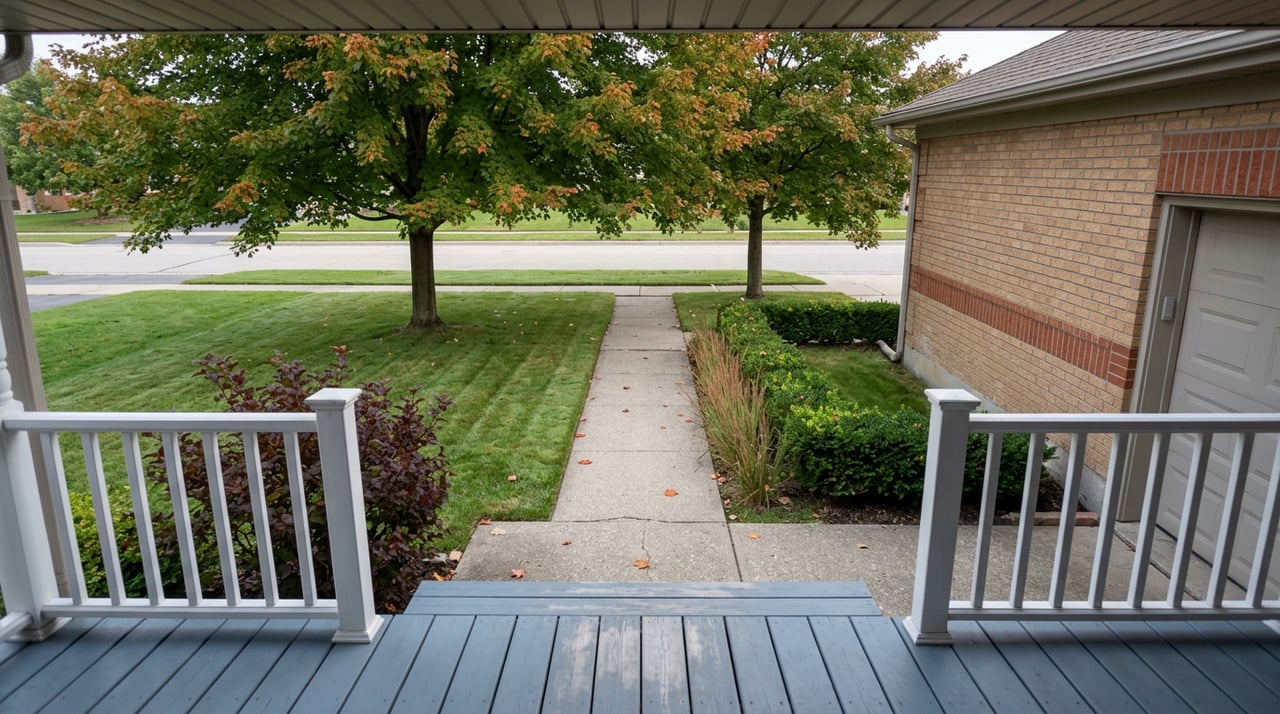
Here is the connection nobody has spelled out yet. Beverly sits on a genuine glacial ridge, the high ground that gives the neighborhood its hills and its name. That topography did two things at once when the area was platted in the streetcar era. It made large, freestanding lots the norm instead of the tightly packed two-flats and three-flats found a few miles east and north. And it made the neighborhood a destination people traveled to on purpose, whether for a cemetery visit or, later, for a specific ice cream stand nobody could get anywhere else.
Large lots on hilly terrain are expensive and awkward to subdivide. That single fact has done more to prevent teardown churn in Beverly than any ordinance. The 1976 landmark designation formalized a protection that the ground itself had already been providing informally for fifty years before that. Rainbow Cone benefited from the same geography in a different way: a destination business on a single fixed lot, in a neighborhood where the lot next door was never going to become three units, had no competitive pressure to relocate, franchise out its original site, or modernize its footprint. The ridge did not just shape the houses. It shaped the incentives.
That is the actual finding here, and it is not something you get from a walk down Western Avenue on any given Tuesday. Two institutions with nothing in common on paper, one selling dessert and one enforcing a federal designation, turn out to be downstream of the same physical fact about where Beverly happens to sit.
If You Live Here Now
None of this requires action from anyone. But if you are newer to the neighborhood and want the texture behind what you are already seeing, the Ridge Historical Society at 10621 S. Seeley Ave. runs the Home Tour most years and is worth a membership if the architecture is part of why you moved here. The Original Rainbow Cone at 9233 S. Western Ave. is open daily, and the mirrors are worth noticing on your way to the counter. Both are still exactly where they started, which by now is the least surprising thing about them.
Beverly does not market itself as a neighborhood that holds onto things. It just happens to be built on ground that makes holding on the path of least resistance, for a hundred-year-old ice cream counter and a fifty-year-old historic designation alike.
If you're thinking about a move into a neighborhood built this way, or you're weighing what a large, hilly lot on the Far South Side actually means for your plans long term, Tina Hollins knows this stretch of the city block by block. Schedule a consultation whenever you're ready to talk specifics.